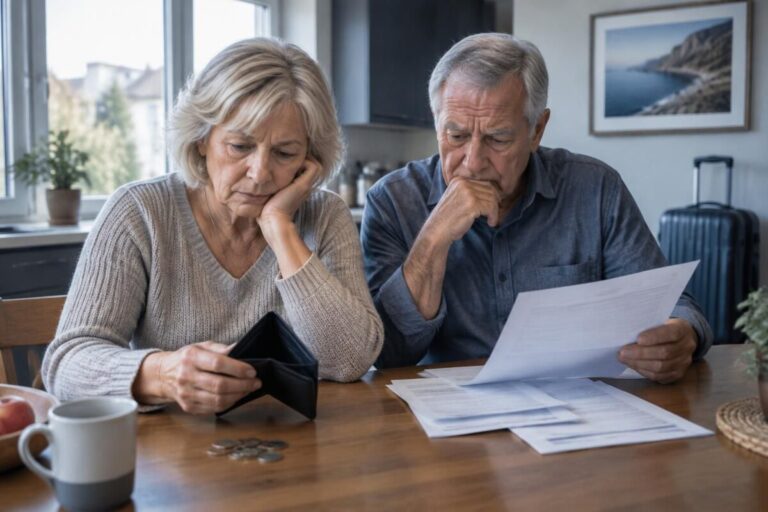

Retirement Budget: Does Living Alone Cost Much More?
Hey, Quentin here. Yes, living alone in retirement often costs more per person, because housing and bills are less easily shared. But the difference depends mainly on rent, health and where you live. A retirement budget should therefore be based on actual expenses, not a universal figure.
“Do this without delay”
- Calculate your net pension, after deductions and tax.
- List your housing, energy, healthcare and transport costs.
- Identify subscriptions and insurance policies you can renegotiate.
- Check whether you’re eligible for housing assistance and complementary health insurance (Complémentaire Santé Solidaire).
- Set aside a small reserve for healthcare and unexpected repairs.
To get a sense of your monthly retirement budget, compare your expenses with this benchmark for living with dignity in retirement and read this analysis of the cost of retirement when living alone.
Living alone in retirement: why the budget is tighter
The difference mainly comes down to fixed costs. A single person pays for housing, internet and often heating without being able to share these bills with a partner. The cost of living alone therefore takes up a larger share of income in essential expenses.
As a benchmark, an average pension of around €1,500 net per month is sometimes cited, but it doesn’t reflect every situation. Career histories, periods of part-time work, homeownership and region all create significant differences. For a single person, a budget of around €1,700 to €2,200 can provide more leeway, depending on housing and lifestyle.
“What matters isn’t just how much money comes in, but what’s left after essential expenses.” This idea sums up the issue of retirees’ purchasing power: a modest pension may be enough in a paid-off home, but become very tight with high rent.
Housing often makes all the difference
Housing for a retiree living alone is often the first expense to look at. A homeowner with no mortgage may have a comfortable amount of leeway, while a renter in a large city may have to spend a significant share of their pension on rent and bills.
Groceries for one person can cost around €250 to €400 per month, depending on habits and where they live. Add health insurance, energy and transport costs to that. Retirement living alone doesn’t necessarily cost much more overall than living as a couple, but expenses are harder to share.
A fictional neighbor, Mireille, thought she’d be able to keep up the same pace after retiring. When she added up her rent, health insurance and bills, she realized that canceling two subscriptions already gave her a little more breathing room each month.
Comparing expenses: single person and couple
Comparing expenses shows the impact of sharing costs. The table below gives a simple illustrative example for a single person with a net income of €1,200. Amounts vary depending on the city, housing and healthcare needs.
| Monthly expense | Illustrative example |
|---|---|
| Housing and bills | €550 |
| Food | €280 |
| Energy and regular bills | €130 |
| Healthcare and health insurance | €60 |
| Transport and leisure | €100 |
| Emergency savings | €50 |
| Left over for adjustments and unexpected costs | €30 |
With these assumptions, almost the entire budget is already committed. A homeowner couple with two pensions can share several expenses, but their healthcare or maintenance costs may also rise. So the number of people alone isn’t enough: the structure of expenses matters as much as total income.
Two situations to distinguish quickly
If you own your home outright, focus especially on energy, maintenance and healthcare: your budget may remain manageable even with a modest pension. If you rent and have a small pension, quickly look into housing assistance and complementary health insurance (Complémentaire Santé Solidaire), as housing costs can throw your budget off balance.
Calculate your retirement budget in three steps
To find out whether you can live alone in retirement without cutting back too much on leisure, start with concrete figures. This three-step method helps identify a shortfall before it becomes urgent.
- Step 1: estimate your net pension using your career record and the official Info-retraite simulator. Don’t confuse the gross amount quoted with the amount you’ll actually receive.
- Step 2: list all your retirement expenses: housing, food, energy, healthcare, transport, taxes and leisure. Include less frequent costs, such as replacing an appliance or dental care.
- Step 3: compare your income with your expenses, then choose a specific action: apply for assistance, renegotiate a contract, adjust your housing or build a reserve that suits your means.
If your expenses exceed your income, check which support schemes you may be eligible for, including ASPA or Complémentaire Santé Solidaire, depending on your resources and circumstances. Rules and amounts change: consult official services before making a financial decision.
Lower the cost of living alone without sacrificing essentials
Start with recurring expenses: home insurance, health insurance, banking, energy and subscriptions. Comparing options each year can save a few dozen euros a month, depending on your contracts and the offers available. It’s better to protect your food and healthcare budget than to cut useful expenses at random.
Your budget should also account for unexpected costs. Even setting aside a small amount regularly can help you avoid paying for a repair with an expensive loan. The goal isn’t to plan for everything, but to make your budget less vulnerable when a bill arrives.
Frequently asked questions about retirement living alone
What budget should a single person plan for in retirement?
A rough estimate of €1,700 to €2,200 net per month may cover essential expenses and leave some room to spare, depending on housing, region and health. Having a home that is already paid off can significantly reduce monthly needs.
Does living alone in retirement always cost more?
Not necessarily in terms of total expenses, but fixed costs are harder to share. Rent, energy and subscriptions therefore often take up a larger share of an individual’s budget.
Which expenses often increase after retirement?
Health insurance, some healthcare, energy and home maintenance can take up a larger share of the budget. Conversely, commuting and eating out may decrease.
How can I check what assistance is available?
Check up-to-date information on official websites and contact your pension fund, town hall or a budget advice service. Eligibility for each type of assistance depends on your resources and personal circumstances.
Thank you for your interest; best, Quentin